
Company news
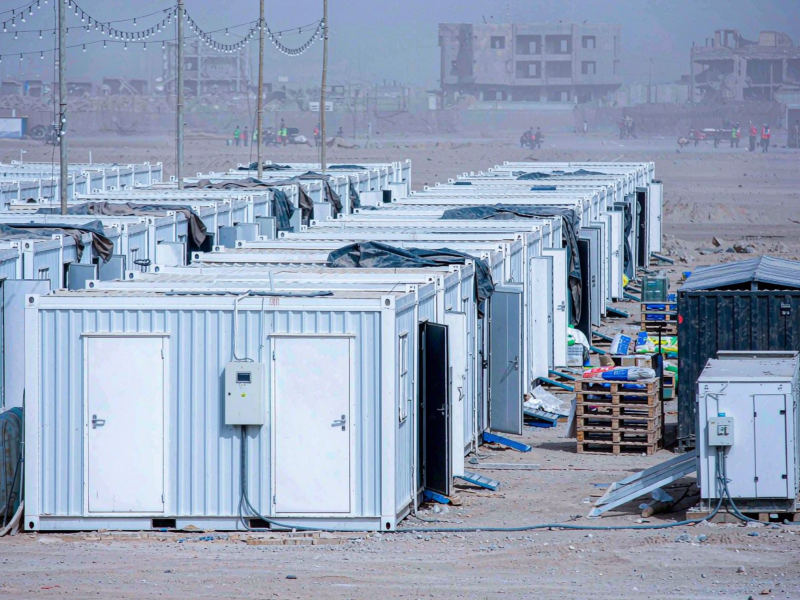
Orientation and Colour Cut the Cooling Load
The same cabin on the same site, rotated a few degrees or given
a different roof colour, can draw very different amounts of air conditioning
energy. The mechanism is heat gain rather than insulation: solar radiation
passes through glazing, is absorbed by the floor and furniture, and becomes
heat that cannot radiate back out — only the air conditioner can remove it.
Put numbers on it. A
west-facing pane sees a summer afternoon peak of roughly 700 W/m². A cabin with
6 m² of west glazing at a solar heat gain coefficient of 0.6 admits about 700 ×
6 × 0.6, or 2.5 kW. Switch to low-e glass at SHGC 0.3 and the same window
admits 1.26 kW — a difference of 1.25 kW, worth roughly half a 3.5 kW air
conditioner, or about 1.5 kWh of storage if you have to cover four night hours.
Add external shading and you take another 60–70 percent off that. The glazing
upgrade usually costs a few hundred dollars.
Roofs work the same
way. Dark steel can run 25–30 °C above ambient in sun, driving heat downward
all day; a light or high-reflectance coating pulls the surface down by a dozen
degrees or more. Then orientation: long walls facing east and west with short
walls north and south is the worst layout. Turning the main glazing to north
and south, and keeping the west wall largely solid or shaded, costs nothing.
All of this is a one-hour decision at design stage. Once the shell is fixed and
the power system is ordered, the only remedy left is more battery and more
diesel.
CATEGORIES
LATEST NEWS
CONTACT US
Name: Mr. Zhang
Mobile:8613222235952
Tel:8613167199094
Whatsapp:8617315222516,8613167199094
Email:skyzhang@podprefab.com
Add:Room B1701, Building 4, Dongfang Xintiandi, Yangshe Town, Zhangjiagang, Suzhou City, Jiangsu Province, China