
Company news
Heat, Dust and Full Sun: Solar Cabins in Arid Climates
Desert sites look like the easiest solar
case in the world: cloudless sky, unobstructed horizon, maximum irradiance. In
practice they are the hardest to get right, because heat and dust work against
the array at exactly the moment it is asked to carry the largest cooling load
of the year.
Heat derating is real
Module power falls as cell temperature
rises, typically by a fraction of a percent per degree above 25°C. On a 48°C
afternoon with a flush-mounted array, cell temperature can be far above
ambient, and the practical output can drop noticeably below the datasheet
figure. Ventilated mounting and a light-coloured roof surface both help; so
does accepting a slightly larger array rather than a tighter one.
Dust costs more than heat
In dusty regions, soiling can quietly
remove a significant share of output within weeks, and it is invisible from the
ground. Two design choices reduce the burden: a modest tilt so that dust and
dew run off rather than settling, and a cleaning interval written into the
operating manual rather than left to chance. Waterless cleaning with a soft
brush is usually enough between rainy seasons.
Cooling load dominates the design
In arid climates the air-conditioner,
not the lighting, decides the array and battery size. Practical measures: shade
the glass facade with a pergola or extended roof edge, specify higher
insulation for the roof panel, and consider a DC-powered air-conditioner that
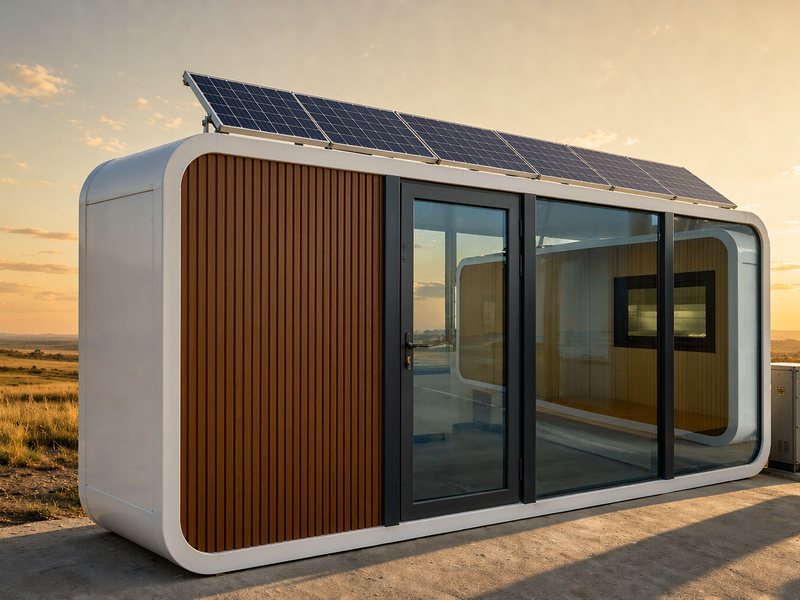
avoids double conversion losses. A 5.8m cabin shaded from direct afternoon sun
can cut its cooling demand substantially for very little extra cost.
Arid markets reward careful specification and punish shortcuts. The difference between a cabin that holds 22°C at three in the afternoon and one that drifts to 30°C is usually decided on the drawing board, not at commissioning.
CATEGORIES
LATEST NEWS
CONTACT US
Name: Mr. Zhang
Mobile:8613222235952
Tel:8613167199094
Whatsapp:8617315222516,8613167199094
Email:skyzhang@podprefab.com
Add:Room B1701, Building 4, Dongfang Xintiandi, Yangshe Town, Zhangjiagang, Suzhou City, Jiangsu Province, China